It would be convenient to say that a piece of shapewear lasts six months, or a year. We are not going to, because we have not found research that measures it. How long a piece keeps its hold depends on how often you wear it, for how long at a time, and how it is washed and dried. What the research does explain is how stretch fabric wears out, and that is enough to make sensible choices.
Why stretch fabric slowly gives
A smoothing garment holds because its knit is stretched when you wear it. A 2018 review of compression garments in the journal Polymers describes how that works and where it fades. Garments of this kind are cut smaller than the body, and the fabric pulls back as it is stretched over you. But fabrics made with elastic yarns give up some of that pull when they are held stretched. The review calls this stress relaxation, and states that it results in pressure degradation: the pressure of elastic fabric is time-dependent, and garments worn for a prolonged period slacken.
Two plain consequences follow:
- Hours of wear matter. A piece worn all day, every day, spends far more time stretched than one worn for an evening.
- Rest matters. Giving a piece time off between wears spreads that time across more than one garment.
The second point is our reading of the mechanism, not a measured result. We have not seen a study that compares a rotated piece with one worn daily.
Washing is not the main enemy
Many people assume each wash takes a little life out of shapewear. The one controlled test we found points the other way, at least for gentle washing. Researchers washed compression stockings made with elastic core yarns five and then ten times, by hand at 25 °C (77 °F) and on a delicate machine program at 30 °C (86 °F) with no tumble drying. The pressure of the washed stockings was higher than that of the unwashed ones, and the difference was statistically significant.
That was a study of stockings, not shapewear, and it did not follow them through months of real wear. It does suggest that a gentle, cool wash is not what wears a garment out. Heat and chlorine bleach are a different matter; our care guide covers why, and the short version is on every product page: hand wash cold, hang to dry, no dryer, no bleach, no fabric softener.
Signs a piece has given up
Without a calendar figure, the best evidence is the garment itself. A piece is near the end when:
- it no longer springs back to its shape after you take it off;
- the waistband or leg edges roll, ripple or sag where they used to lie flat;
- it pulls on more easily than it did when new, in the same size, and sits looser all over;
- the fabric shows wear: shine where it rubs, small holes, or seams and hooks coming loose.
At that point the piece has stopped doing the job you bought it for. If, on the other hand, a piece suddenly feels tighter, check the fit rather than the fabric: the fit guide explains how our sizes are chosen.
How many pieces to own
There is no research-backed number here either, so this is practical reasoning rather than a rule.
Three facts point the same way. Cleveland Clinic advises washing shapewear often to avoid skin irritation, not wearing it for long stretches, and not sleeping in it. Stretch fabric is best dried in the air rather than in a dryer, as Purex advises, which takes time. And, as above, fabric that rests between wears spends less time stretched.
Put together:
- For a piece you wear most days, two is the practical minimum: one on, one washed and drying. A third gives each piece a full day off.
- For a piece you wear for occasions, one is usually enough, as long as it is washed after each wear.
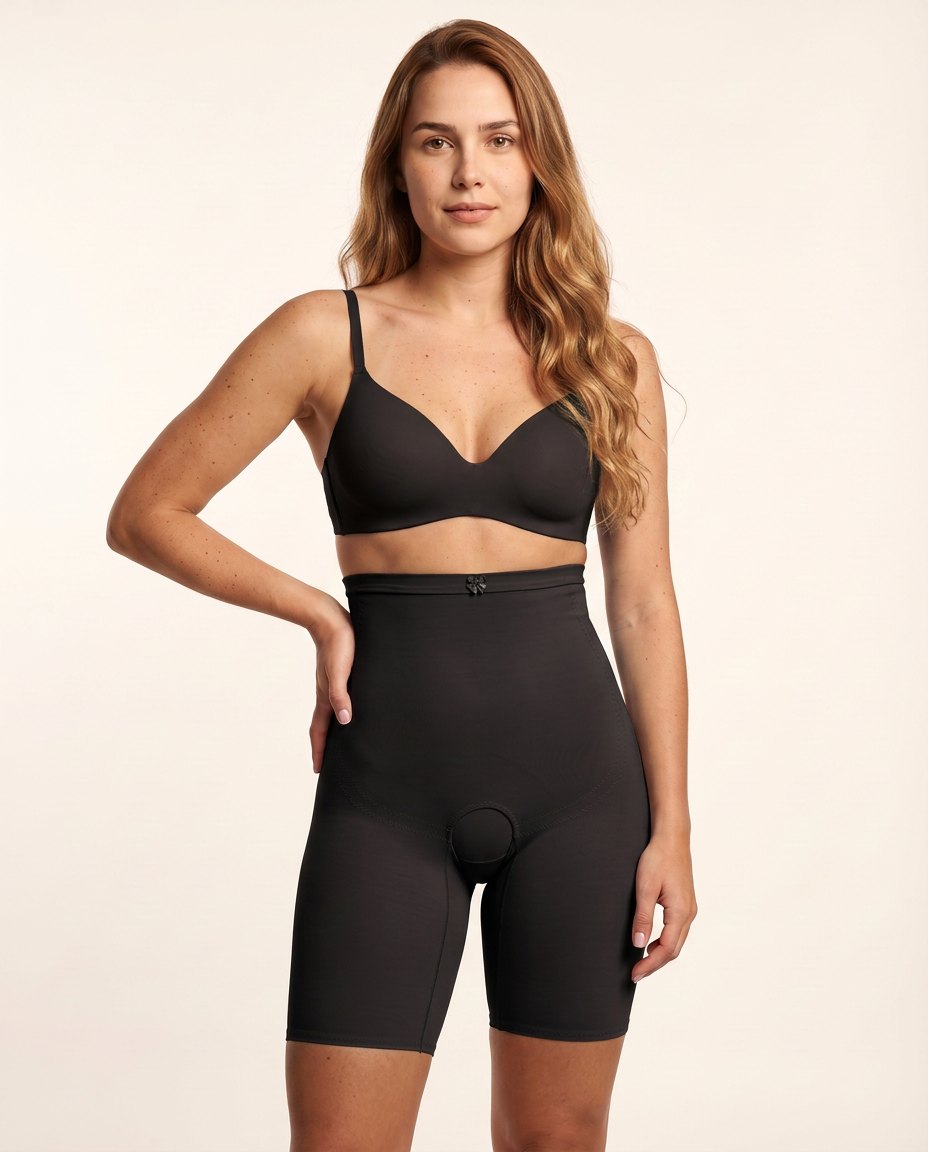
- For different outfits, owning different shapes does more than owning duplicates. A high-cut brief such as the High-Waist Hook-Front Brief and a short with legs such as the Pull-On Open-Gusset Short suit different hemlines, and rotating between them also rotates the wear.
What to expect
A well-treated piece wears out gradually, not all at once. Wash it cool, dry it in the air, give it days off, and replace it when it stops springing back. That is less precise than a number of months, but it is what the evidence supports.
Sources
- Europe PMC. Compression Garments for Medical Therapy and Sports (Polymers, 2018). Accessed 2026-10-02.
- Europe PMC. Development of a Care Labelling Process for Compression Stockings Based on Natural (Cotton) Fibers (Polymers, 2021). Accessed 2026-10-02.
- Cleveland Clinic. A Doctor's Advice on Wearing Shapewear. Accessed 2026-10-02.
- Purex. How To Wash And Care For Spandex. Accessed 2026-10-02.