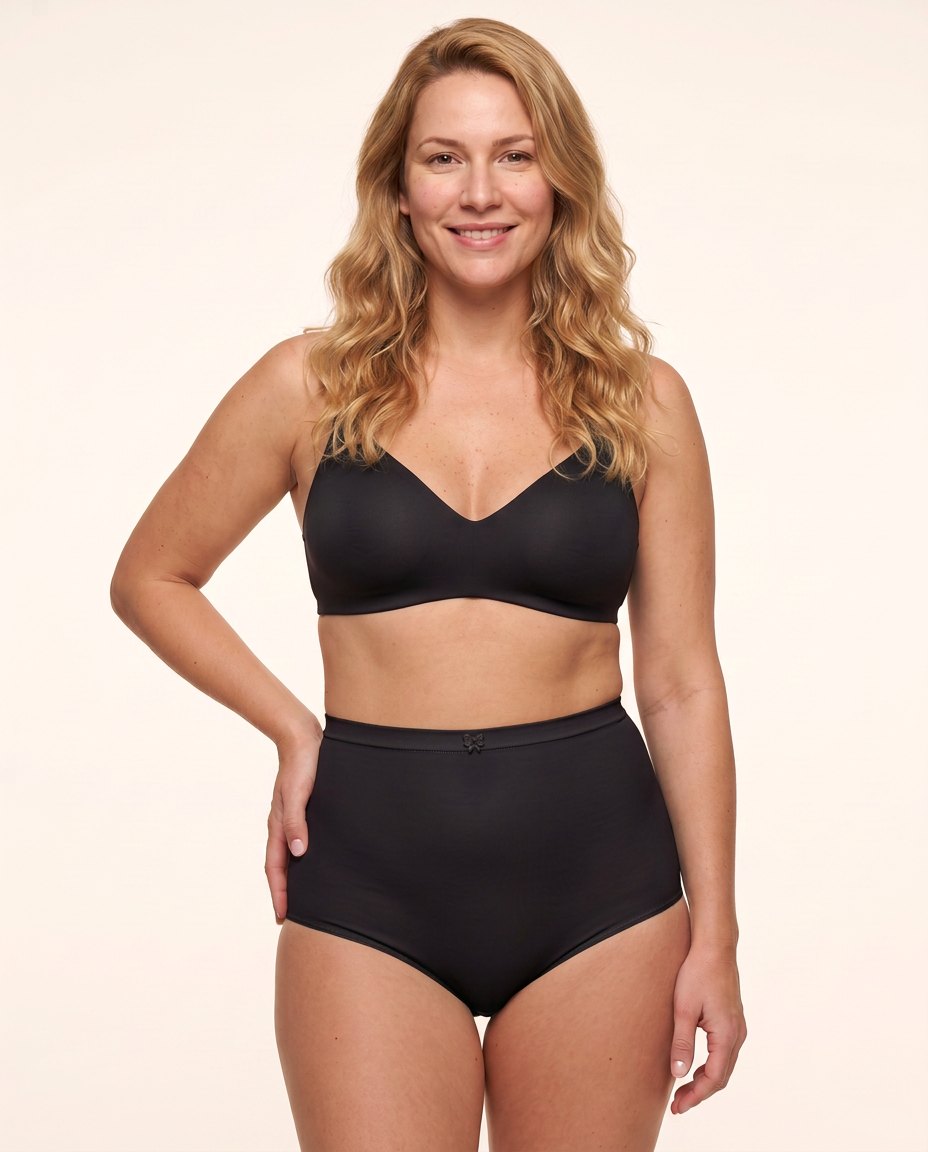
Shapewear is cut to sit close to the body, and its hold comes from a stretch fiber that does not like some ordinary laundry habits. Washing it well is not complicated. It just asks for a little more care than a T-shirt does, and most of that care comes down to three things: cool water, no chlorine bleach and no dryer.
Start with the label, not a rule of thumb
The stretch in most shapewear comes from spandex, the fiber also called elastane and sold under trade names such as Lycra. It stretches to as much as five times its length and returns to its original shape, which is exactly what a smoothing garment needs.
The Lycra Company keeps its own care advice short. It tells you to follow the garment maker’s instructions, and, where there are none, to wash or dry-clean according to the main fiber in the fabric. That is not a dodge. Spandex is almost always blended with another fiber, so the label sewn into the piece is the instruction that counts, not a general rule about stretch fabric.
For Bellcorpus pieces, the care line on every product page is the same: hand wash cold and hang to dry, with no dryer, no bleach and no fabric softener. You will find it on the Bow-Waist Smoothing Brief and on every other piece in the shop.
Use cool water and a gentle hand
Purex, the detergent maker, gives the same basic advice for spandex that most care labels do: use cool water and the gentle cycle, and turn the garments inside out and sort them by color before you wash.
For a hand wash, that looks like this:
- Fasten any hooks and eyes first, so they cannot catch on the knit. On a front-fastening bra such as the Hook-Front Wide-Strap Bra, do the whole row.
- Turn the piece inside out.
- Wash it in a basin of cool water with a mild detergent, moving it through the water rather than scrubbing.
- Rinse until the water runs clear, then press the water out between your hands or in a towel instead of wringing.
If your label allows a machine, one lab study gives some reassurance about gentle machine washing. Researchers testing compression stockings made with elastic core yarns compared hand washing at 25 °C (77 °F) with a delicate machine program at 30 °C (86 °F), a 600 rpm spin and no tumble drying. For the first five washes they found no statistically significant difference between the two methods, and they recommended that machine routine. Those were stockings, not shapewear, so treat it as a pointer rather than a rule, and follow your own label first.
Keep chlorine bleach away from it
This is the rule with the clearest evidence behind it. Clorox, which makes chlorine bleach, says plainly that its disinfecting bleach is not safe for spandex, and that this applies even to fabrics with only a small amount of spandex in the blend. Purex adds that chlorine bleach could stain spandex fabric for good.
A spandex patent from the fiber industry explains why manufacturers worry about it. Its background section states that spandex washed with chlorine bleach shows “a considerable deterioration of physical properties” in its polyurethane component, which is the main part of the fiber. The same document notes that chlorinated swimming pool water, at 0.5 to 3.5 parts per million of active chlorine, also deteriorates the properties of spandex in swimsuits.
So shapewear does not belong in the pool, and if it does meet chlorinated water, rinse it in fresh water rather than letting it dry that way. If a light piece needs brightening, use a color-safe, non-chlorine product, and only if the label allows bleach of any kind.
Skip the dryer, and go easy with the iron
Purex advises letting spandex drip dry rather than putting it through the dryer, and using a low heat setting if you iron. The patent above lists heat, along with ultraviolet light, among the stresses that cause discoloration and loss of properties in spandex, and notes that stabilizers can be added to the fiber to guard against them.
In practice:
- Hang the piece, or lay it flat, somewhere airy.
- Keep it out of strong direct sun for long stretches.
- Do not put it on a radiator or use a hair dryer to hurry it along.
- Most shapewear never needs ironing. If yours does, use the lowest setting the label allows.
Wash it often
Frequent washing is not only about the fabric. Cleveland Clinic notes that skin irritation is the most common problem people have with shapewear: the skin can become chafed, red or itchy. Its advice includes keeping the garment clean with frequent laundering. A piece worn against the skin for hours is due for a wash after each wear, which is one reason it helps to own more than one of the pieces you reach for most.
The short version
- Read the care label first. It outranks any general advice, including this article.
- Fasten hooks, turn the piece inside out, and wash in cool water.
- Never use chlorine bleach, and rinse out pool water promptly.
- Air dry, away from heat and strong sun.
- Wash after each wear.
None of this is difficult, and it is the difference between a piece that keeps its stretch and one that gives up early. If you are choosing a size before your first order, start with the fit guide.
Sources
- The LYCRA Company. Quality | LYCRA Fiber Frequently Asked Questions. Accessed 2026-10-02.
- Wikipedia. Spandex. Accessed 2026-10-02.
- Purex. How To Wash And Care For Spandex. Accessed 2026-10-02.
- Clorox. Can You Bleach Spandex Fabric?. Accessed 2026-10-02.
- Google Patents. US6692828B2: High chlorine and heat resistant spandex fiber and manufacturing method thereof. Accessed 2026-10-02.
- Europe PMC. Development of a Care Labelling Process for Compression Stockings Based on Natural (Cotton) Fibers (Polymers, 2021). Accessed 2026-10-02.
- Cleveland Clinic. A Doctor's Advice on Wearing Shapewear. Accessed 2026-10-02.